.png)
About Wiri
The Wiri project is named for the ‘wiri’, which represents the origins of performance in the cosmogeny of te ao Māori (the Māori world).
The pūrākau (story) of wiri begins with Tamanuiterā, the atua or deity of the sun, who spends six months of every year with his winter wife, Hinetakurua, and the other six with his summer wife, Hineraumati. The son of Tamanuiterā and Hineraumati, Tanerore, amuses his mother during winter months with a dance, the Haka Tanerore. The dance manifests as the shimmering heat haze which rises from the earth after rainfall. In Māori performance traditions, the dance of Tanerore is denoted by the wiri, a quivering hand movement which accompanies songs, dance and rituals of celebration, love, welcome, grief, anger, resistance and despair.
The Wiri project draws on this whakapapa to reflect our methodology:
drawn from Matauranga Māori, connecting to emotional representations beyond the literal or codified, and bringing in a range of bodies, voices, brains and hearts to work through ideas in interdisciplinary collaboration.
Bridging the gap between stage actors and digital actors.
Current interactive media tools lack a significant puzzle piece: full-body interactive animation informed by human models of emotion, the core of human interaction. Creating character animation for the interactive context is a complex, labour-intensive process that is difficult to scale well. We will enable the creation of truly emotive character animation for digital humans in the interactive context.
The Making of
Our Team
An Interdisciplinary Approach to Creative Technology
The Wiri Project is made up of an interdisciplinary team of researchers and academics. With unique approaches across Psychology, Design, Game Development, Computer Science and Theatre. The Wiri Project provides a unique lens to approach the problems in digital character development.

Areito Echevarria
Senior Lecturer
Victoria University of Wellington
Areito Echevarria is an Academy Award winning artist and researcher with over 21 years of Visual Effects experience. Areito’s research deals with motion capture and generative deep learning approaches to synthesizing animation and human motion for interactive experiences.
.jpg)
Nicola Hyland
Senior Lecturer, Te Whare Ngangahau
Victoria University of Wellington
Nicola (Te Atihaunui-a-Pāpārangi, Ngāti Hauiti) is a Senior Lecturer in Te Whare Ngangahau. Her research investigates contemporary Māori performance and theatre, popular culture and Indigeneity, and affect and wairua in performance.

Hedwig Eisenbarth
Associate Professor
School of Psychology
Victoria University of Wellington
Associate Professor in Psychology at Victoria University of Wellington. Her Affective and Criminal Neuroscience lab investigates how emotional experiences create and contribute to human interactions.

W. Bastiaan Kleijn
Professor of Computer Science, School of Engineering and Computer Science
Victoria University of Wellington
Bastiaan is professor for Computer Science at Victoria University of Wellington. He was a founder of Global IP Solutions, a company that provided the original enabling audio technology to Skype and later developed audio and video processing technologies for communication over the Internet for companies such as IBM, Cisco, and Google.
.jpg)
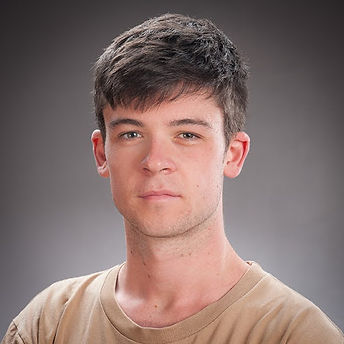
Liam Crowley-de Thierry
PhD Candidate
Victoria University of Wellington
Liam completed a Bachelor of Science with Honours in Psychology in 2021 before beginning his PhD in Psychology with the Wiri project. His work involves generative modelling of human gait. His work also investigates how body motion can signal emotional states.
.jpg)
Jeremy Cameron
PhD Candidate
Victoria University of Wellington
His current research is based on a novel approach to emotional affordances and emotionally dynamic characters in video game design.
.jpg)
Roydon Goldsack
PhD Candidate
Victoria University of Wellington
Roydon is investigating how Bodily Activity predicts Emotional States using Machine Learning Models. Their PhD work covers the generative modelling of emotional human motion and interpersonal synchrony in emotional performances.
.jpg)
Adriana Vasinca
Masters Student
Victoria University of Wellington
Adriana's research questions how different video game mechanisms may contribute to Avatar Identification and Immersion. Adriana is very interested in the interaction between theatre and psychology.
.jpg)
Jacob Wheeler
Masters Student
Victoria University of Wellington
Jacob is working on his Master of Design Innovation where he is investigating the state of immersion in video games and how generative character motion can affect a player’s engagement in an interactive experience.
.jpg)
Emma Buurmans
Research Assistant
Victoria University of Wellington
Emma has recently completed a Masters of Science in Forensic Psychology at Victoria University of Wellington, investigating the potential of EEG-neurofeedback training as a tool for emotion regulation in individuals with varying levels of psychopathy. She is now working as a psychology researcher.
Our Connections
Affiliated Team members:
Avery Ward
Elena Limmer-Wood
JP Lewis
Contributors:
Consultants:
Mohsin Ali
Tama Kawha
Our Goals
We want to transform the understanding of basic human interaction with innovative approaches, including multichannel recording and machine learning, challenging existing categorical models of emotion.
This work will contribute to elevating the quality and productivity of the NZ interactive media sector, such as games and animation, to the next level by providing cutting edge technology innovation.
To do this, we captured human emotional performances based on a new model of emotional embodiment. Based on body motion, physiological activity, facial expressions and self-reported emotional states, we derive a holistic expression of the emotional performances.
Using the data obtained from the performances, we develop flexible models of emotional interactions using machine learning analyses. These models will provide the basis for feature implementation in interactive media development.